
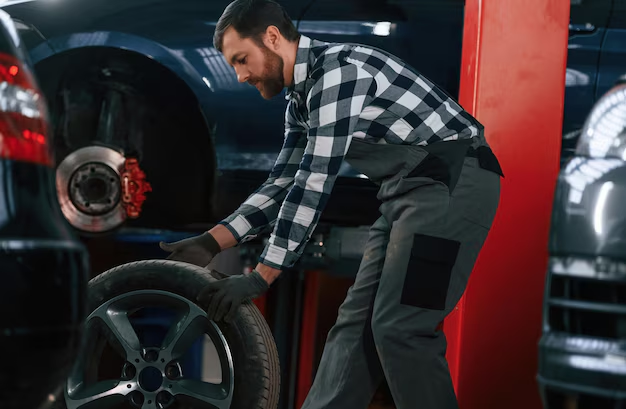
As a car owner, noticing unusual noises from your vehicle can be worrying. Two of the most common complaints we hear at Franconia Auto Care in Alexandria, VA, involve clicking noises when turning and humming noises while driving. Understanding whether these sounds come from a failing CV axle or worn wheel bearings can save you from expensive repairs and, more importantly, keep you safe on the road.
Let’s break down what these noises mean, how to identify the root cause, and what steps you should take next.
What Causes Clicking Noise When Turning
If you hear a distinct clicking noise when turning your vehicle, it often points to a problem with your CV joints. CV joints, or constant velocity joints, connect your car’s transmission to the wheels while allowing them to turn and move with the suspension. Over time, these joints wear out or their protective boots tear, allowing dirt and debris in and lubricants out.
Key CV Axle Symptoms
Recognizing bad CV joint symptoms early can prevent further damage. Some warning signs include:
- Clicking noise when turning: The most classic symptom. You may hear it more when making sharp turns at low speeds.
- Grease on the inside edge of your tires: A torn CV boot often leaks grease.
- Vibration while driving: A worn CV joint may cause noticeable vibrations, especially during acceleration.
- Difficulty steering: In advanced cases, steering may feel less responsive.
Ignoring these signs can lead to a complete CV joint failure, which can immobilize your car and create a safety hazard.
Understanding Wheel Bearing Noise
Wheel bearings are another common source of automotive noise. These small components allow your wheels to spin smoothly with minimal friction. When they begin to fail, you might hear a humming, grinding, or growling noise that changes with vehicle speed.
Identifying Wheel Bearing Symptoms
Wheel bearing symptoms are distinct but can sometimes be confused with CV axle issues. Key signs to watch for include:
- Humming noise while driving: Typically increases with speed and may get louder when turning.
- Grinding noise while driving: Often a more severe indicator of bearing wear or damage.
- Uneven tire wear: Worn wheel bearings can cause your tires to wear irregularly.
- Wheel play or looseness: If a wheel has excessive movement when lifted, the bearing may be failing.
Unlike CV joints, wheel bearing noise often persists even when driving straight. If left unaddressed, a failing bearing can cause the wheel to seize or even detach from the vehicle.
CV Axle vs Wheel Bearing Noise: How to Tell the Difference
At first, clicking or humming noises may seem similar, but there are ways to distinguish between a bad CV joint and a failing wheel bearing:
- Noise pattern: Clicking noises are usually associated with turning and acceleration, while humming or grinding noises occur steadily and often increase with speed.
- Location of the sound: CV axle problems often originate from the front or rear wheels near the CV joint, whereas wheel bearing noise can appear from the wheel hub area.
- Vibration: A damaged CV joint can cause vibrations during acceleration, while worn wheel bearings might create vibrations that correlate with wheel speed.
- Grease or fluid leaks: CV joint boots may leak grease onto the inside of your tire, which is not a common symptom of wheel bearing wear.
Why Prompt Attention Matters
Delaying repairs can quickly turn minor issues into major expenses. A worn CV joint that breaks while driving can cause your vehicle to lose power to the wheel, making it unsafe to drive. Similarly, a failing wheel bearing can cause severe wheel damage, uneven tire wear, and potential accidents.
At Franconia Auto Care, our certified technicians in Alexandria, VA are trained to diagnose these issues accurately. With over 2,500 cars repaired and 5,400 tires replaced this year alone, we bring both experience and precision to every repair.
Professional Diagnosis and Repair
Proper diagnosis involves a detailed inspection of your vehicle, including:
- Lifting the car to inspect CV joints and wheel bearings.
- Checking for grease leaks, torn boots, or abnormal wheel movement.
- Road testing to replicate noises under controlled conditions.
For CV axle replacements, we use high-quality parts to restore smooth operation and prevent future problems. Wheel bearing replacement in Alexandria, VA, is handled with care, ensuring the proper torque and alignment to extend the life of your tires and suspension.
Regular maintenance also plays a role in preventing these issues. Checking CV boots, lubricating joints, and monitoring for early wheel bearing symptoms can keep your car running quietly and efficiently for years.
When to Call a Professional
If you notice any of the following, it’s time to schedule an appointment with a trusted auto repair shop:
- Persistent clicking noise when turning.
- Humming or grinding noise while driving.
- Unusual tire wear or vibration.
- Visible grease leaks near your wheels.
Franconia Auto Care offers reliable, expert auto repair services for Alexandria drivers. As a TechNet Professional Automotive Service® center, we provide a nationwide warranty for 24 months or 24,000 miles on repairs. This ensures peace of mind and confidence that your car is in good hands.
Our team of trained technicians is committed to upfront pricing, quick service times, and exceptional customer care. From CV axle replacements to wheel bearing noise diagnostics and repairs, we handle every job with precision and attention to detail.
Don’t wait for a small clicking or humming sound to turn into a dangerous problem. Bring your car in for a thorough inspection and get back on the road safely and confidently.