
When it comes to your safety on the road, few components of your vehicle are as crucial as your brakes. They’re your first line of defense in emergencies, help you navigate daily traffic, and keep you and your passengers safe every time you drive. So, when your brakes start acting up, it’s not something you can afford to ignore.
But how do you know if your brakes are crying out for help? In this guide, we’ll cover the top signs your vehicle needs brake repairs, why they happen, and what you should do about them. Whether you’re hearing strange sounds or your car isn’t stopping like it used to, we’ve got you covered.
1. Squeaking or Squealing Noises
What it sounds like: A high-pitched screech or squeal when you press the brake pedal.
What it means: This is often one of the first indicators that your brake pads are wearing thin. Most brake pads have a small metal shim—called a wear indicator—that makes a squealing noise to let you know it’s time to replace them.
What to do: Don’t ignore this noise. It’s a warning system designed to protect you. If caught early, replacing brake pads is a relatively inexpensive fix.
2. Grinding Sounds
What it sounds like: A harsh grinding or growling noise when braking.
What it means: If you hear grinding, chances are your brake pads have completely worn down, and the metal part of the brake is now rubbing directly against the rotor. This can cause serious damage to your braking system.
What to do: Head to a repair shop immediately. Continuing to drive with metal-on-metal contact will not only reduce your stopping power but also lead to costly rotor or caliper repairs.
3. Vibrations or Pulsing Brake Pedal
What it feels like: A shaky steering wheel or vibrating brake pedal when stopping.
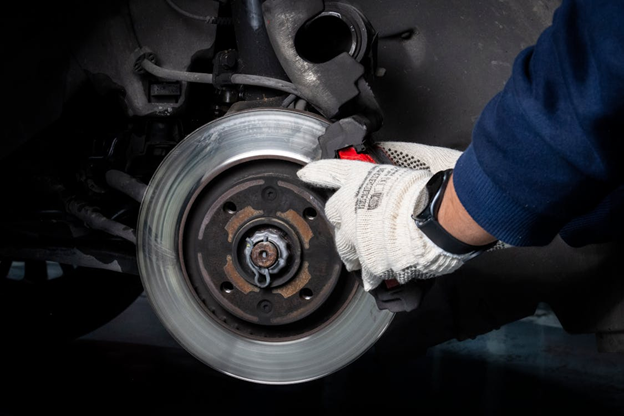
What it means: This typically points to warped rotors. Rotors are the large discs your brake pads clamp onto to stop the wheels. Over time, excessive heat or uneven wear can cause them to warp, leading to vibration.
What to do: Have your brake system inspected. Warped rotors can sometimes be resurfaced, but if they’re too worn, they’ll need replacing.
4. Longer Stopping Distances
What it feels like: Your car takes longer than usual to come to a full stop.
What it means: This is a major red flag. It could be worn brake pads, low brake fluid, air in the brake lines, or a brake system leak. Any of these issues will reduce your braking effectiveness—and your safety.
What to do: Get your vehicle inspected right away. A delay in stopping could mean the difference between avoiding an accident and being in one.
5. Spongy or Soft Brake Pedal
What it feels like: Your brake pedal feels soft, spongy, or sinks to the floor.
What it means: Air or moisture might have entered the brake lines, or you might have a leak in the braking system. Brake fluid is hydraulic, which means any loss of pressure seriously compromises how well your brakes function.
What to do: This requires immediate attention. A professional technician can bleed the brake lines, check for leaks, and restore the brake pressure.
6. Dashboard Warning Light
What it looks like: A brake light or ABS (anti-lock braking system) light on your dashboard.
What it means: Your car is equipped with sensors that alert you to potential brake system issues. If this light is on, something is off. It could be as simple as low brake fluid or as complex as a sensor or ABS system malfunction.
What to do: Don’t ignore dashboard lights. Even if your car “feels” fine, these alerts are your car’s way of telling you a problem is coming—or already here.
7. Burning Smell When Braking
What it smells like: A sharp, chemical odor after hard braking or going downhill.
What it means: Overheated brakes. This can happen if you’ve been riding the brakes for an extended period, especially when descending hills. The smell might also indicate that the brake caliper is stuck.
What to do: Pull over and let the brakes cool down. If the smell persists or you see smoke, it’s time to visit a repair shop immediately.
8. Car Pulls to One Side
What it feels like: Your vehicle veers to the left or right when braking.
What it means: This could indicate uneven brake pad wear, a stuck caliper, or a problem with the brake fluid distribution. In some cases, it could also be an alignment issue—but it’s best to start with the brakes.
What to do: Have a technician check your brake system for caliper or fluid issues, and rotate or replace pads if needed.
9. Leaking Brake Fluid
What it looks like: A clear to yellowish fluid pooling under your car near the wheels or beneath the master cylinder.
What it means: Brake fluid leaks are dangerous. The fluid is essential for creating the pressure that activates your brakes. Without it, your brakes might fail completely.
What to do: Call a professional right away. Leaks need to be located and repaired, and the brake system flushed and refilled.
10. Unusual Brake Pedal Behavior
What it feels like: Any change in how your brake pedal responds—like feeling harder, lower, or more resistant than usual.
What it means: This could indicate problems with the brake booster, master cylinder, or air/hydraulic issues within the system.
What to do: If something feels “off” with your pedal, don’t wait for it to get worse. Get it checked immediately to avoid further damage or unsafe driving conditions.
How to Address Brake Issues Before They Get Worse
The good news? Most brake issues start small—and if you act early, repairs are usually quick and affordable. Here are a few tips to stay on top of your braking system:
- Schedule regular inspections: Your brakes should be inspected at least once a year, or every 12,000 miles.
- Listen and feel for changes: You drive your car every day—so you’ll know when something feels different. Don’t ignore your instincts.
- Don’t delay repairs: Catching brake problems early can prevent bigger, more expensive repairs down the road.
Use a trusted repair shop: Brake service is not the place to cut corners. Choose a shop with experienced, certified technicians you can trust.
Trust Franconia Auto Care for Brake Repairs in Alexandria, VA
When it comes to keeping your vehicle safe, Franconia Auto Care has your back. Conveniently located on Franconia Road, we’re proud to serve drivers in Alexandria with expert brake service and repairs. Our team of skilled technicians will diagnose the issue and get you back on the road with confidence.
We live by the 3 Rs of Auto Repair:
Reliability – We treat your car like it’s our own.
Responsiveness – We listen, explain, and care.
Right Prices – Quality repairs that won’t break your budget.
Plus, all qualifying repairs are backed by a 24-month/24,000-mile Nationwide Warranty through TechNet—giving you peace of mind no matter where the road takes you.
Don’t Take Chances With Your Brakes – Visit Franconia Auto Care Today!
If your vehicle is showing signs of brake trouble, don’t wait until it’s too late. Schedule your inspection or brake repair with Franconia Auto Care in Alexandria, VA. From routine maintenance to major repairs, we’ll make sure your vehicle stays safe, responsive, and road-ready.
Stop by our shop on Franconia Road or give us a call today to schedule service!